Exploring Energy-Efficient Garage Doors in Edmond

For most Edmond homeowners, the garage door represents the largest single opening in the entire house, yet it often gets the least attention when it comes to insulation. That oversight matters more than people realize, especially in a climate that bounces between scorching 100-degree summers and bitter winter freezes. Homeowners weighing their options, whether that means a full replacement or efficient garage door repair, are finding a much wider selection than they might expect.
Construction types and R-values now range from basic setups to genuinely high-performing systems, giving buyers more room to choose what actually fits their needs. What follows is a grounded, practical breakdown of how these doors function, where they differ from one another, and how homeowners can figure out which option makes the most sense for their particular house.
Why Edmond's Climate Makes Energy Efficiency Worth Considering
Oklahoma summers push temperatures well past 100 degrees, and winters in the Edmond area bring cold stretches that can dip below freezing for days at a time. A garage door is the largest opening in most homes, and without adequate insulation, that opening functions as a direct channel for outdoor temperatures to affect the interior. For attached garages especially, that temperature exchange reaches into the living space, which means your HVAC system compensates for what the door is letting in.
Most homeowners do not think about the garage door as part of their home's thermal performance. It tends to stay off the radar until a heating or cooling bill draws attention to it. Replacing an older, uninsulated door with an insulated model is one of the more cost-effective ways to reduce that exchange, and the benefit shows up year-round rather than just in one season.
What R-Value Means for a Garage Door
R-value is the standard measurement for thermal resistance, and it applies to garage doors the same way it applies to wall insulation or windows. A higher R-value means the material does a better job of slowing heat transfer. For garage doors, the R-value is determined primarily by the insulation material used and how well it is integrated into the door's construction. A door where insulation is inserted as a separate panel component will behave differently over time than one where the foam is bonded to the steel skins as part of the manufacturing process.
Polystyrene and polyurethane are the two most common insulation materials in garage doors. Polystyrene panels are typically inserted between door layers, while polyurethane foam is injected and bonds directly to the door skin, which results in a more uniform insulation layer and a more rigid door panel overall. R-values on residential insulated garage doors typically range from around R-6 to R-18 depending on construction method and material. For an attached garage in Edmond, a door in the R-13 to R-18 range makes a meaningful difference compared to a single-layer steel door with no insulation.
How Door Construction Affects Long-Term Performance
Insulation alone does not determine how well a garage door manages temperature over time. The construction of the door itself plays a significant role. A single-layer door with insulation added between panels behaves differently than a door engineered as a multi-layer system from the start. The steel skins on either side of the insulation, along with the way those layers are bonded together, affect both the door's thermal performance and its resistance to warping, denting, and wear.
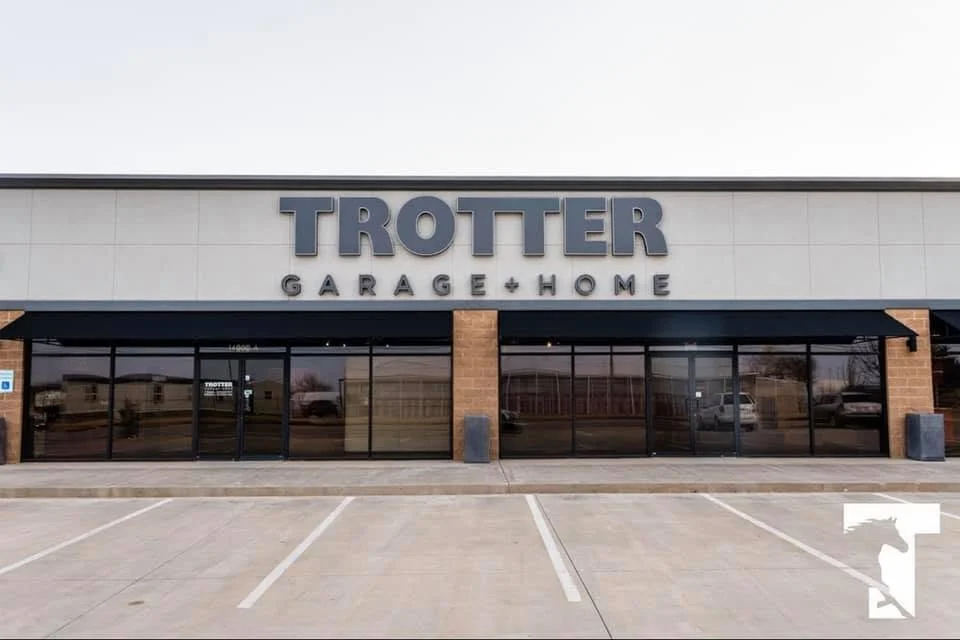
Steel doors with polyurethane foam injected between an inner and outer steel skin tend to hold their shape better under Oklahoma's temperature extremes than doors assembled from separate components. They are also generally quieter in operation because the foam layer dampens vibration. The trade-off is cost. A well-constructed insulated door will cost more upfront than a basic single-layer option, and that is a conversation worth having with someone who can show you the construction differences in person rather than in a spec sheet. Our showroom in Edmond carries a range of door constructions so that comparison can happen with real panels in front of you rather than descriptions on a screen.
How Weather Sealing Works Alongside Door Insulation
A well-insulated door with poor weather sealing still underperforms. The insulation in the panels addresses conducted heat transfer through the door itself, but gaps around the door's perimeter allow conditioned air to move in and out directly. Bottom seals, side seals, and the top seal where the door meets the header all contribute to the overall thermal performance of the garage opening.
Weather seals degrade over time. The rubber or vinyl material compresses, cracks, and eventually stops making consistent contact with the floor or framing. Replacing seals on an existing door is a relatively low-cost maintenance task, but it is often overlooked until the gap becomes visible or the floor gets wet during a rain. If you are installing a new door, the seal package that comes with it should be part of the evaluation. A high-quality door paired with minimal sealing still leaves gaps that undercut the R-value you paid for.
Choosing the Right Energy-Efficient Door for Your Edmond Home
The right door depends on how your garage is used, how it connects to the rest of your home, and what you are trying to accomplish. For a detached garage used primarily for storage, the calculus is different than for an attached garage with a conditioned space above it or adjacent living areas. The thermal goals, the aesthetic requirements, and the budget all factor into which door makes sense.
What we recommend, and what we have recommended to homeowners in this market for more than 40 years, is seeing the options in person before making a decision. The difference between door constructions, insulation types, and steel gauges is difficult to evaluate from a product page.
Our showroom in Edmond is where those comparisons happen on real panels, and our staff can walk you through what differentiates one construction from another to help you find the right fit for your garage door installation and match it to what your home actually needs.
Related Topics: