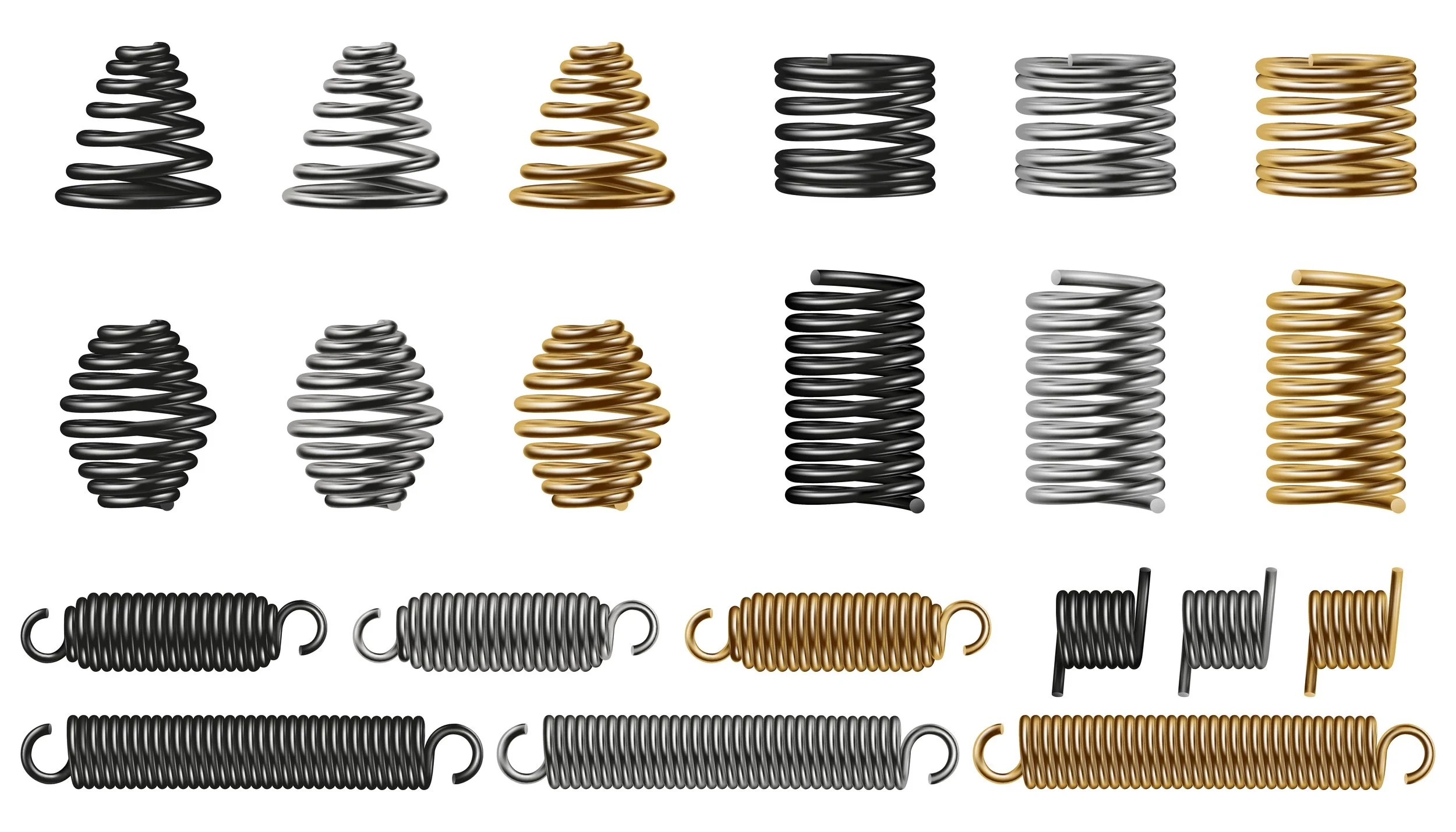
A standard torsion spring is rated for roughly 10,000 cycles, or about seven to ten years for most households. Age matters less than the count, because a spring wears by use rather than by calendar. Our family has run Trotter Overhead Door as a garage door company in Oklahoma City and Edmond, Oklahoma since 1983. Spring replacement is the single most common repair we are called out for. Counting your own daily cycles gives a better estimate than the install date does.
What a spring cycle actually is
A cycle is one full open plus one full close. The rating is a count rather than a timespan, which is why two identical springs can fail five years apart on the same street.
Work out your own number. A household opening the door four times a day runs about 1,460 cycles a year, so a 10,000-cycle spring lands near seven years. Add a teenager driving and a midday errand, and ten cycles a day spends the same spring in under three.
Partial opens count the same as full ones. Running the door up a few feet for ventilation costs a whole cycle.
Standard springs compared with high cycle springs
Most residential doors ship with standard springs. High cycle springs use thicker wire and more coils, cost more upfront, and last proportionally longer.
| Spring Type | Rated Cycles | Roughly, at 4 Cycles a Day |
|---|---|---|
| Standard torsion | About 10,000 | Seven years |
| High cycle torsion | 20,000 to 50,000 | Fourteen years and up |
The upgrade is worth pricing when the garage doubles as the main entry or a workshop, or when the door is large or insulated. An explanation of how torsion springs work covers why wire size and coil count change the rating.
What shortens a torsion spring's life
Cycle count is the main driver, but five other things pull the number down.
Rust. Moisture corrodes the coils, and corrosion raises friction on every cycle. A light annual lubrication slows it considerably.
No lubrication. Dry coils grind against themselves and wear faster than lubricated ones do.
An unbalanced door. When the door is out of balance, one spring carries more than its share and fails early.
Temperature swings. Hot summers and hard freezes mean repeated expansion and contraction, which fatigues the steel.
A single spring on a double door. Two springs share the load. One spring carries all of it and reaches its rating sooner.
These spring-specific factors are part of a broader set of habits that affect garage door lifespan overall, since the door, opener, and springs all wear faster or slower together depending on how the system is used and maintained.
Warning signs before a spring breaks
Springs usually give warning, and the door is the easiest place to read it. A door that feels heavier than it did, or that the opener strains to lift, points to a spring losing tension.
Watch for a visible gap in the coil, rust spots, or a door that rises unevenly with one side lagging. Squeaking or grinding on the way up is worth attention the same week. A walkthrough of the signs a spring is broken goes through each symptom in order, including how to check the door's balance by hand.
A loud bang from the garage with no obvious cause is usually a spring letting go. Stop using the door at that point, and avoid parking under it.
When the door feels heavier than it should, a technician can test the balance and measure the remaining tension in one visit.
Can you replace a torsion spring yourself?
Technically, yes, and we would still advise against it. A wound torsion spring holds enough stored energy to break bones, and winding bars are no substitute for having done it before.
Mistakes compound. A spring wound to the wrong tension leaves the door unbalanced, which shortens the life of the replacement and strains the opener. Sizing is its own problem, because wire diameter, inside diameter, and length all have to match the weight of the door.
When a door has two springs, and one has broken, both get replaced. They wear at the same rate, so pairing a new spring with a worn one puts the door out of balance immediately.
What a spring replacement involves
A garage door spring replacement is a one- to two-hour job in most cases. Our technicians carry common spring sizes on the truck, so the majority of these calls finish on the first visit.
The visit covers measuring the existing spring, fitting the replacement, and balancing the door by hand. We then test the opener's force settings against the new tension. Repair labor carries a 30-day warranty, and springs, rollers, hinges, cables, and drums carry a limited lifetime warranty.
Frequently asked questions
The questions below come up on nearly every spring call.
How many years do garage door torsion springs last?
Seven to ten years for a standard spring under average use. The rating is roughly 10,000 cycles, and one cycle is a single open plus a single close. A household running the door eight or more times a day will reach that rating in three to four years. High cycle springs last proportionally longer.
Should both springs be replaced at the same time?
Yes, when the door has two. They wear at the same rate, so if one has failed the other is close behind. Pairing a new spring with a worn one leaves the door unbalanced and shortens the life of the new spring. Replacing both also avoids a second service call within the year.
What does a broken torsion spring look like?
The clearest sign is a visible gap in the coil above the door, usually a few inches wide, where the spring has separated. The door will not lift, by opener or by hand. A loud bang from the garage earlier in the day is often the moment it broke.
Is it safe to use the door with a broken spring?
No. The door becomes dead weight, which puts the full load on the opener and the cables, and it can drop without warning. Stop using the door and avoid parking underneath it until a technician has fitted a replacement spring.
Do high cycle springs cost more?
They cost more upfront because they use thicker wire and more coils. Whether that pays back depends on usage. A garage that serves as the main entry or a workshop reaches a standard spring's rating quickly. That makes the upgrade worth pricing during the service visit.
Have a spring measured in Edmond
A spring losing tension is easy to measure and cheap to catch early. Call (405) 341-9601 and we will test the door's balance, measure the spring, and tell you where it stands. Our office and showroom are at 14000 North Santa Fe Ave., Edmond, OK 73013, open Monday through Friday from 7:30 am to 5 pm.
Related Topics: