How Garage Door Sealing Impacts Energy Efficiency and Pest Prevention in Edmond
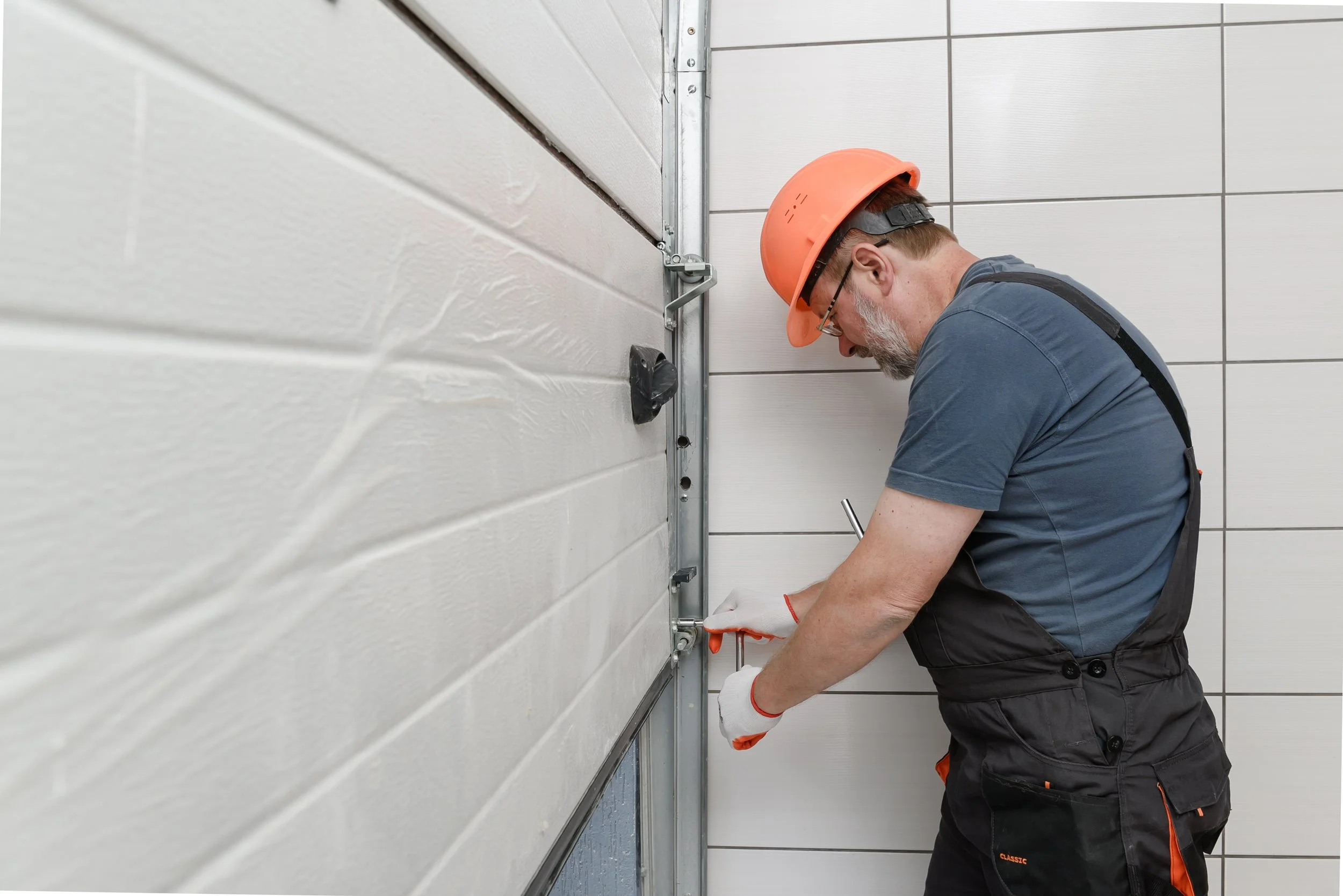
A failed garage door seal costs you twice. The utility bill climbs, and sooner or later something crawls in under the door. That gap is usually the largest unsealed opening in the house, and it sits at floor level where nobody looks. Trotter Overhead Door has been a family-owned garage door company in Oklahoma City since 1983. Weather seals are one of the first things our technicians check on a service call in Edmond, Oklahoma. Pull your door down tonight, kill the garage light, and look along the bottom edge. Daylight means air and insects are already using it.
What a Garage Door Seal Is Actually Sealing
Most homeowners picture one rubber strip along the bottom of the door. The system is four separate parts, and each closes a different opening. The bottom seal, or astragal, runs the width of the door and compresses against the floor. A threshold seal does the same job from below, bonded to the concrete so it rises to meet the door. Perimeter weatherstripping mounts on the stop molding and closes the vertical sides, while a top seal handles the header above.
Presence is not performance. A seal can look intact from the driveway and still pass air. Rubber takes a compression set after years of being squeezed flat every night. The strip then stops springing back far enough to fill its own gap. We test by closing the door and reading the light from inside a dark garage, which catches failures an outside inspection misses.
How Much Air Moves Through a Gap You Can Barely See
Run the arithmetic on a standard sixteen-foot double door. A half-inch gap along that edge leaves about ninety-six square inches permanently open, which is roughly two-thirds of a square foot. Nobody would leave a window cracked that wide from October through March. This one sits where cold air pools, so it goes unnoticed for years.
Where it costs you depends on how the garage is built. An attached garage shares a wall with conditioned rooms, and often a ceiling with the space above. It works as a thermal buffer between outdoor air and the rooms you heat. Open the bottom gap, and that buffer starts running near outdoor temperature, so the shared wall does work it was never sized for.
Homes with ductwork or a water heater in the garage feel it soonest, because those systems shed heat into air that is now moving. Door insulation is a separate lever from sealing, and the two get confused constantly. The R-value of the door panels does nothing for you while the perimeter is still open.
What Comes In Through the Same Gap
Oklahoma State University Extension is blunt about fall pest control. Sealing entry points is the most effective way to keep overwintering insects out. The gap under a garage door is the widest entry point most houses have, and it leads somewhere dark. Boxelder bugs and Asian lady beetles push indoors once the first cool nights arrive. Rodents follow the same instinct as outdoor temperatures drop.
The garage then becomes a staging area rather than a destination. Pests that get under the door find stored boxes and pet food. They also find an interior door nobody seals as carefully as the front entry. A gap narrow enough to look harmless is still wide enough for a mouse, and crickets, spiders, and scorpions need considerably less. Blowing rain and red dirt use the same opening, which is why a garage with a tired seal needs sweeping so often.
Why Seals Wear Out Faster in Central Oklahoma
Rubber ages on a schedule set by the weather around it. Central Oklahoma swings wide in temperature inside a single week. South-facing doors take long stretches of direct summer sun, and ice sits at the threshold in winter. Each cycle stiffens the compound further, and a hardened seal can no longer deform around the small irregularities it exists to fill.
The floor matters as much as the rubber, because garage slabs settle and few stay level across sixteen feet of opening. A slab that has risen toward the center holds the door up there, so daylight shows at both corners. The seal reads as fine from the middle of the driveway and fails where nobody is standing. We check the corners first on older homes around Edmond, Oklahoma, for exactly that reason.
How to Tell Your Seal Has Failed
The useful checks take five minutes and need no tools, and they only work with the door fully closed. A seal that looks compressed at eye level can still ride above the slab at the corners. Work from inside with the overhead light off, because daylight is the one test nobody can argue with.
Daylight along the bottom edge. Stand inside the closed garage with the lights off and watch the two corners.
A seal that no longer flattens. A healthy bottom seal visibly squashes against the floor. One holding its shape is not touching.
Cracking, splitting, or a permanently flat profile. Run a hand along the strip. Brittle rubber that crumbles at the edges is finished.
Leaf litter, dust lines, or water marks inside the door. Debris collecting in a band a few inches in marks where air enters.
Insects, webbing, or droppings near the threshold. Activity concentrated at the door line points straight at the door line.
Two of these together are enough to act on. If only the first shows up and the gap is slight, replacing a garage door seal is within reach of an afternoon's work. Match the replacement to the retainer already on your door. A strip that does not seat in the channel will pull loose on the first cold morning.
Seeing daylight under your door or a seal that no longer flattens? Give us a call at (405) 341-9601, and we’ll send a technician to find out whether the rubber, the slab, or the door is the problem.
Which Seal Does Which Job
Homeowners often replace the bottom seal, watch the daylight shrink, and call the job done. The sides and the header are separate openings with separate parts. On a door that has never been reworked, those parts are usually older than the bottom strip. Knowing which piece covers which opening makes the problem easier to describe over the phone.
| Seal | Where It Sits | What It Closes |
|---|---|---|
| Bottom seal (astragal) | In a retainer on the door's bottom edge | The gap between door and floor |
| Threshold seal | Bonded to the slab under the door | Uneven floors and water running in |
| Perimeter weatherstrip | On the stop molding, both jambs | The vertical gaps at the sides |
| Top seal | Along the header above the door | The gap at the top when closed |
Pairing a bottom seal with a threshold is a combination worth knowing. It handles the uneven-slab problem that a bottom seal alone cannot. The threshold raises the contact point to meet the door, rather than asking rubber to stretch into a low spot. On an uneven slab, that pairing does more for the draft than any amount of door insulation.
When a New Seal Will Not Fix It
Sometimes the rubber is fine, and the door is the problem. A bottom section bent by a bumper no longer presents a straight edge to the floor. The seal then contacts at the high points and bridges over the rest. Worn rollers let the door drift in the track and seat crooked. A spring that has lost tension lands the door heavy on one side, which flattens the seal unevenly.
That diagnosis is worth getting right before you buy parts twice. Seals get the same attention as springs, cables, rollers, hinges, tracks, and sensors in professional garage door repair and maintenance work. Every visit starts with finding out which of those is causing the gap. Repair labor carries a 30-day warranty, and springs, rollers, hinges, cables, and drums carry a limited lifetime warranty.
One customer described the thoroughness this way: "Very helpful in getting everything set up... went above and beyond checking all the extra springs and bolts. Everything was done in a timely manner and exactly as they said it would be. They were very friendly and helpful in explaining things to a normal person." (Michelle B., website testimonial)
Frequently Asked Questions
These four come up on nearly every call where the seal is the complaint. The answers cover what a service visit includes, how often the work is worth doing, and what our repairs are backed by.
-
Our tune-up covers lubrication of all moving parts, a spring balance test, a sensor alignment check, hardware tightening, and a track inspection. We also assess the condition of the door itself, including the weather seal. Anything we find gets explained before we recommend a repair, so you decide what gets done.
-
Once a year is the standard recommendation. A routine service covers lubrication, a balance check, hardware inspection, a sensor test, and spring tension. We look at the seal and threshold on the same visit. Annual maintenance catches wear while it is still cheap to correct, rather than after a breakdown.
-
We repair springs, cables, rollers, hinges, weather seals, sensors, tracks, and openers on most residential and commercial doors. Our technicians carry common parts on the truck, so a large share of these jobs finish in a single visit.
-
Repair labor carries a 30-day warranty. Springs, rollers, hinges, cables, and drums are covered by a limited lifetime warranty. These are written terms set per service category, not a general promise. You can read the full version on our warranty page before any work starts.
Contact Us
Seeing daylight under your door? Call us at (405) 341-9601, and we will get a technician out to read the gap properly. We cover Edmond, Oklahoma, and the wider OKC metro. The visit starts with finding out whether the rubber, the slab, or the door is at fault.
If the door is older and you are weighing replacement over repair, book a free consultation at trotteroverheaddoor.com/book-free-consultation. You can also walk the showroom at 14000 North Santa Fe Ave., Edmond, OK 73013. The seal and threshold options sit there on real doors you can put a hand on.